Confession time: I’ve never liked babysitting.
As the oldest of eight kids, one might argue that I’d been tapped out. That’s possibly true, but at the root of it babysitting just felt contrived to me, which should have been a marker that I wouldn’t be the mom who played with her kids.
I don’t have the patience/vision to sit for hours (or even 15 minutes) with a tub full of Legos and come up with something new.
You want me to play house? When I’ve got this one to take care of?!
And let’s talk Nerf battles. You mean run around while also successfully aiming projectiles and avoiding getting hit?
No, I really don’t want to have a tea party. I want to drink my actual tea with soothing music in the background and a book in my lap, preferably in front of the fire.
Before discovering the world of modern board games, I’d grit my teeth through a round of Candyland, surreptitiously weeding out any candy cards that could land players back at the bottom of the board. Anything longer than four minutes and I teetered on the verge of quoting from Dante’s Inferno.
(Dramatic? Who’s being dramatic? Have you actually played Candyland?! I rest my case.)
You see what my kids are working with here.
When we toppled into the world of board games, I discovered that:
Disclosure: This post may contain affiliate links. As an Amazon associate, I earn a small percentage from qualifying purchases at no extra cost to you. Thank you for supporting the blog!
Family Culture
Some families run together. Some cook together, or so I’ve heard. Some jam on their instruments.
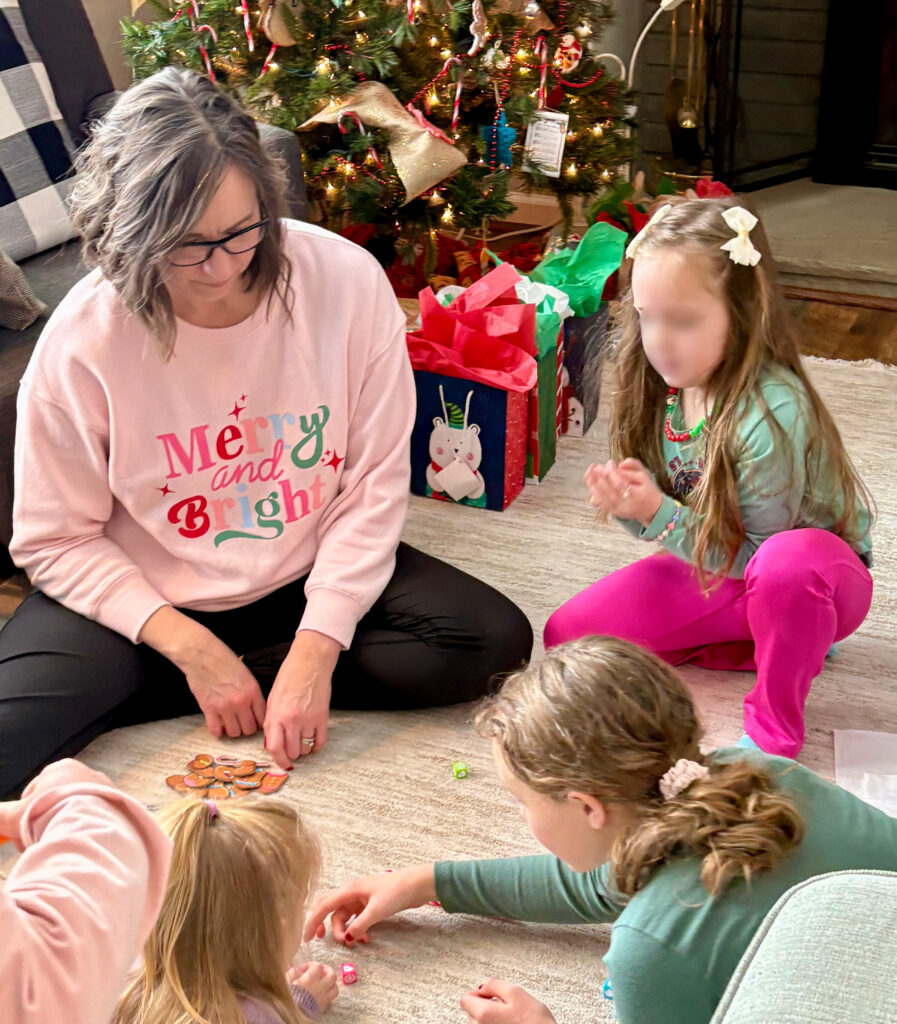
While we have a few other things established as part of our family culture (such as reading aloud and hiking), the most portable, interactive, and all-inclusive activity is games.
The first time I heard one of my kids tell a friend, “We play a lot of games,” my heart danced. Reagan will often ask me why I became a game nut, as if he can’t remember the mini-crisis that led to this change.
My six-year-old niece knows she can walk in the door and ask to play a game and I’ll drop everything to join her. Kids who come to my house understand that, if they claim boredom, I’ll send them to visit the game shelves. More often than not, Cassidy takes care of this journey early on in the visit.
This is who we are as a whole: we read, we hike, and we play games.
Fostering Connection
If you always feel connected to your people, go ahead and skip this section. In fact, why have you even read this far? You’re set!
But for the rest of us, maybe even those who—like me—are dealing with middle school distancing or the appeal of screens, games offer a safe(ish) Switzerland where everyone is equal and the only goal is a fun time together.
One summer day we were prepping for a vacation and everyone was in a bit of a funk. Life was less than pleasant in the McDonald household.
Now, I happen to know that my kids are adrenaline junkies. (It’s genetic. Look it up.) So we dropped everything and met on the floor in my studio to play a round or two of Five-Minute Marvel, a real-time co-operative game. As we raced to defeat the villains together, we were reminded that we actually like these other humans who share quarters with us. Ten minutes later, we resumed packing as nicer, happier people.
In Superbetter, Jane McGonigal cites a study from Singapore which revealed that playing (in this case, Wii Bowling) “with a stranger not only makes you like that person more…but also makes you like more everyone else in the world who you perceive to be like your game partner.” (McGonigal, 2015) Distilled down? If you want your people to like you more, play with them.
(And yes, I know, I don’t *need* my kids to like me, but it sure improves the quality of life!)
Although I understand the logic behind it, one of my main issues with the traditional school model is how it separates kids into groupings by age. This makes sense from a knowledge and abilities standpoint, but is socially faulty. We are literally teaching our kids that their friends should be those of the same age and stage of life, resulting in a widespread struggle to relate to people of diverse ages.
While not everyone can (or even wants to) pursue non-traditional education for their kids, we can combat this systemic flaw by inviting our kids to play games with people of all ages, beginning with us.
Fighting is part of it
Just in case anyone is wondering, gaming with your kids isn’t….well, it isn’t all fun and games. My people are still learning to lose graciously. They struggle to show kindness to their opponents. Cards are thrown (or torn), chairs shoved back with force, and hurtful words spoken. We argue over which games to play and whose dibs day it is.
From where I sit to write this, I can see these words in my journal:
“Parenting is all about training sinners and pointing them to Jesus. Robots don’t need Jesus, but my kids and I do. Parenting done right is messy and requires divine intervention.”
Raising kids and fostering connection isn’t easy. Relationships never are. Games, however, make the journey much more fun.
A few co-operative games to help you foster connection:
5-Minute Dungeon (Because 5-Minute Marvel is out of print)
Forbidden Island (Younger children might be frightened by the theme of escaping from a sinking island)
Kites (Fast paced like the 5-minute games, but with a lighter theme of keeping kites in the air)
Have you ever tried a co-operative game? What are your favorites? Let us know in the comments!