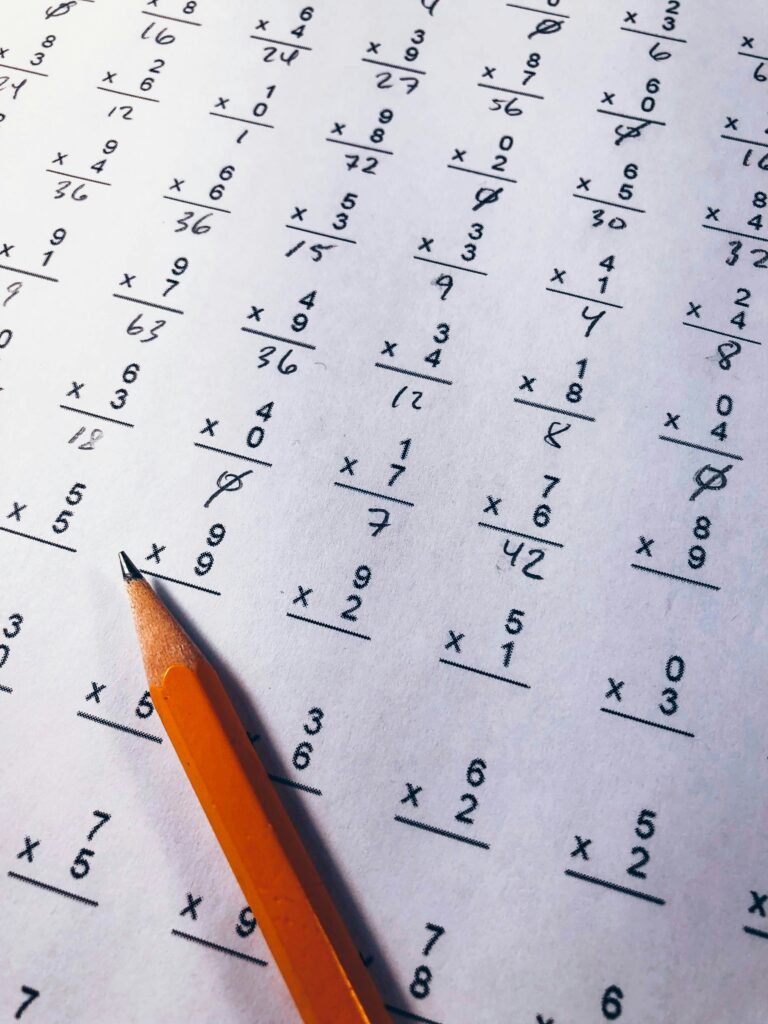
Raise your hand if you loved a good worksheet in elementary school—if you were just dying for a page of math facts to fill out, and even better if it was timed work.
No?
The only thing I remember liking about any kind of worksheet is the fact that it was measurable, which meant I knew when I was done. But the journey to the finish line grated.
I didn’t love math as a kid, but I became good at it because my dad loves math and, for being an engineer, he’s a pretty good teacher. Still, there were tears and arguments.
When I first discovered that Cassidy did not have a natural bent towards math concepts, I panicked. How could this be? It’s math. Black and white. Right or wrong. Then, when my mom told me I just needed to drill flashcards with her, I balked and reached out to other homeschool moms.
Drill and kill is not in my vocabulary.
Several friends directed me to a math curriculum that used games instead of worksheets to lock in concepts. While I loved the idea, the games were dryyyyy. The cards didn’t shuffle well. Sometimes the rules were hazy, and I’ve discovered that Rodney Smith doesn’t offer Watch it Played videos for RightStart games.
Seriously, Rodney! What’s up with that?
That’s around the time this simple fact became apparent to me:
All well-designed games require math.
It’s true. Go check your shelves and come back. There’s math somewhere in your games, even if it’s below the surface. Sometimes it’s as simple as adding up your final score, or calculating the best move. Other times it’s deeper, calling you to consider probabilities. And remember—geometry and spatial awareness are part of math.
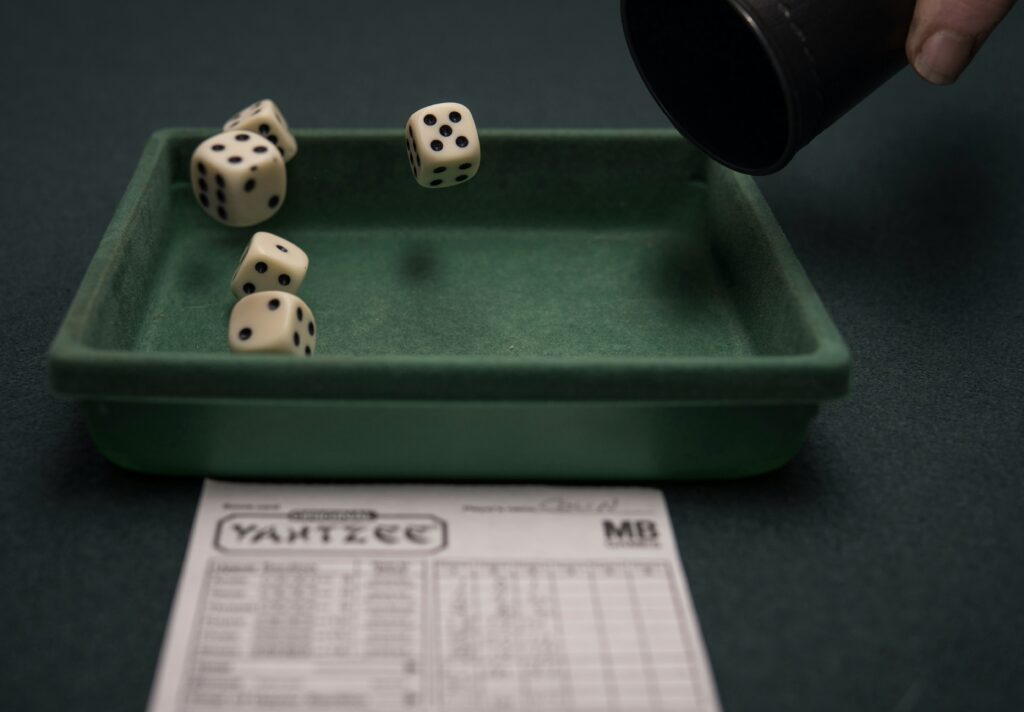
Take, for example, Yahtzee. In this simple dice-chucking game, kids learn to subitize (the ability to instantly recognize the quantity of items without counting) and are required to add their dice each round as well as their final score. Phase 10 requires calculating your best discard choices each round to trim down negative points if your opponents are about to go out. Rummy 500 equals adding up your score each round. And this just scratches the surface of basic games available in many homes, not even delving into the magical world of modern tabletop games.
Disclosure: This post may contain affiliate links. As an Amazon associate, I earn a small percentage from qualifying purchases at no extra cost to you. Thank you for supporting the blog!
The summer of games
One summer, I’d told the kids they had to do a math lesson each day I worked. As my summer piano schedule is a bit lighter, it wasn’t that big of a deal—I’d work anywhere from zero to three days a week. Reagan wasn’t thrilled, but he hustled out the work.
Cassidy, on the other hand, gave the impression that I was sucking out her soul, one math problem at a time.
So I pivoted. Instead of a worksheet, Cass had to play a game or two with me that incorporated the concepts she needed.
Anyone can add, and by third grade, pretty much anyone can multiply, give enough time. My concern was that I didn’t see the concepts sinking into her marrow. I wanted Cass to know without hesitation that 3+5+7=15 just as quickly as she could spit out 4×3=12.
That summer we played all the dice games that required three or more dice in to increase her subitization (not sure that’s a word) speed. We played games that involved multiplication. She enjoyed the privilege of adding everyone’s score.
And it didn’t hurt all that much.
Choosing a game over a math lesson
If you’re reading this as a homeschooler, and if you’re wired anything like me, it takes some self-talk and concerted effort to drop the math lesson for the day to game instead. And I love games.
Answer me this: do you want your kid to finish their grade with a filled-in workbook (or notebook, if they’ve graduated past workbooks) or an educated mind?
Yeah, that’s what I thought. Me, too. And yet! Letting go is a struggle.
Consider this: when your kid finishes this grade, would you like her to think learning is fun or a duty? Again, it’s pretty rhetorical. Learning can’t always be painless, but if it leans towards fun that will affect your kid’s view of growth for her entire life.
Games for math warm-ups
Kindergarten to early elementary:
- Dragonwood is a delightful game for all ages with some poker-esque elements. It was our top pick for the summer of games.
- Clumsy Thief comes in three sizes, making it playable beginning in late preschool and going through elementary school. We’re stuck on the Candy Shop version because it’s so cute.
- Dice Fury (for odd and even recognition)
- Holly Jolly is especially delightful at Christmastime.
- Point Salad was our go-to game for a while since it was quick to teach, quick to play, and required both addition and simple multiplication.
- Sleeping Queens should be in every home! I’ve never met a girl who didn’t fall in love with this game, even if she’s not into princesses.
- Zeus on the Loose is especially fun if your kiddo is into Greek mythology. Miss Game School has an excellent video suggesting a way to turn this game on its head to combine both addition and subtraction.
Mid- to late-elementary (but also useful for review in early middle school):
Jaipur is a two-person-only game full of trading for gold, silver, gems, and camels.
Blobby’s Pizza is an excellent game that gently teaches and then reinforces fractions with the cutest pizza monsters imaginable.
Kingdomino not only requires addition and multiplication. It also helps build spatial awareness.
Outnumbered: Improbable Heroes is a co-operative game, perfect for if your kiddo hasn’t yet learned to lose graciously. (Also helpful if you need work on that skill!)
What games do you enjoy that also help with math concepts? Drop your favorite titles in the comments below!